 Home
HomePower Banks in 2026: Key Trends and Where the Next Opportunities Are
 Oct 05,2026

 MiBA
MiBA
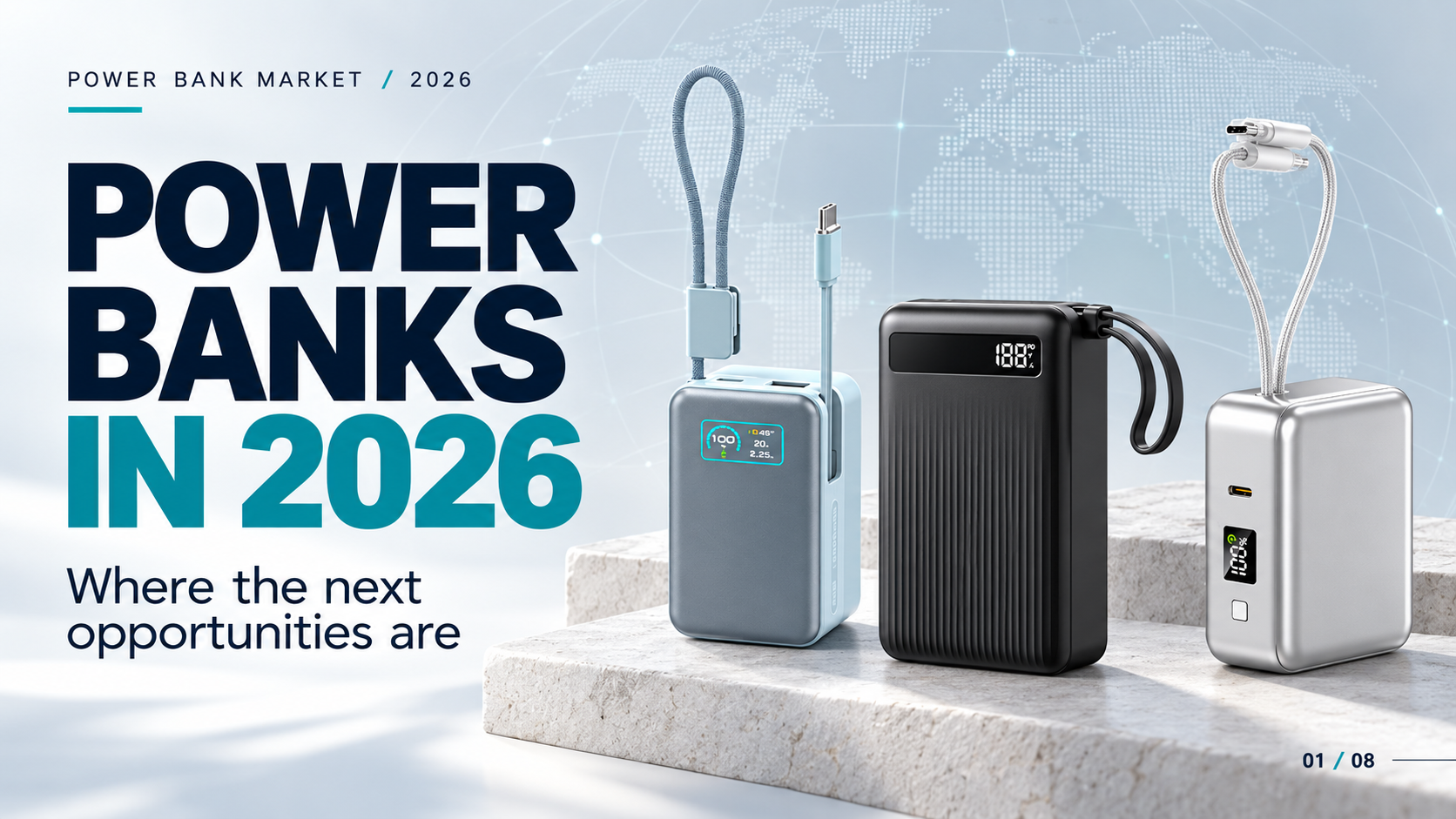
Fast charging, wireless convenience and product reliability are reshaping the category. For brands and distributors, the opportunity is to match a clear use case with a product customers can trust.
Market research cutoff: October 3, 2026.
Power banks have become everyday accessories. Yet a mature category can still create room for better products: fewer cables to carry, faster charging, clearer specifications and dependable after-sales support.
The strongest commercial question is no longer simply “How much capacity can we offer?” It is “Which charging problem can we solve better—and at a sustainable margin?”
First, read the market data carefully
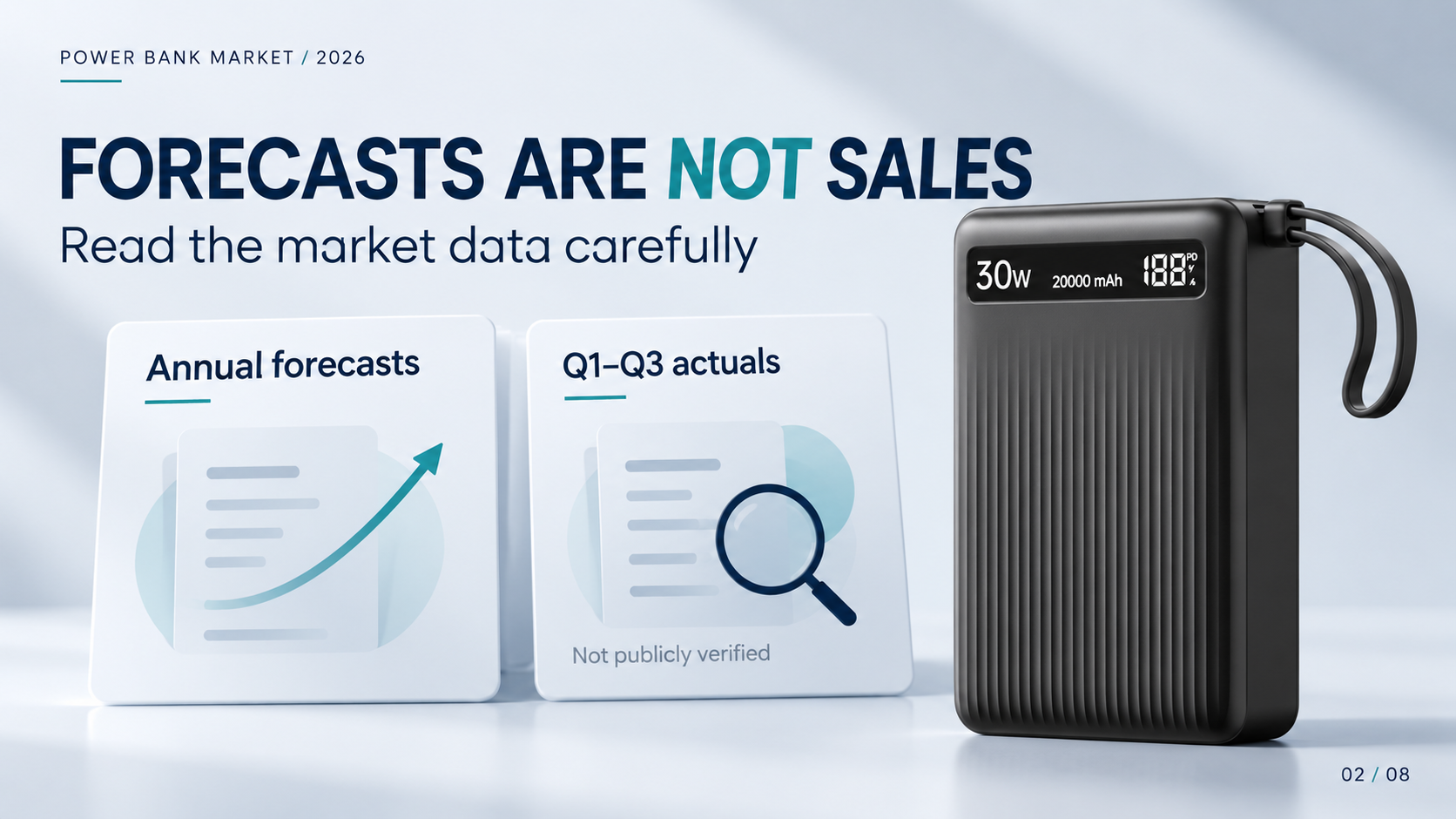
Public market reports point to continued growth, but their estimates differ substantially. Fortune Business Insights forecasts a global power bank market worth US$16.46 billion in 2026, while Grand View Research forecasts US$22.6 billion. Differences in scope and methodology mean these figures should not be combined into a single market model.
More importantly, this research did not identify publicly verifiable January–September 2026 unit sales for the global market or a consistent dataset covering Europe, North America, South America, the Middle East, Southeast Asia, Russia and Australia. Annual revenue forecasts are not quarterly unit sales, and shipments are not necessarily purchases by end customers.
Regional definitions also matter. Fortune's European coverage includes Russia, and its North American coverage includes Mexico. Latin America is broader than South America; Middle East and Africa is broader than the Middle East. Treating these categories as interchangeable can distort a market-entry decision.
Use market reports to understand direction. Use country-level channel data, actual selling prices and inventory movement to decide how much stock to buy.
Convenience is becoming a stronger product proposition
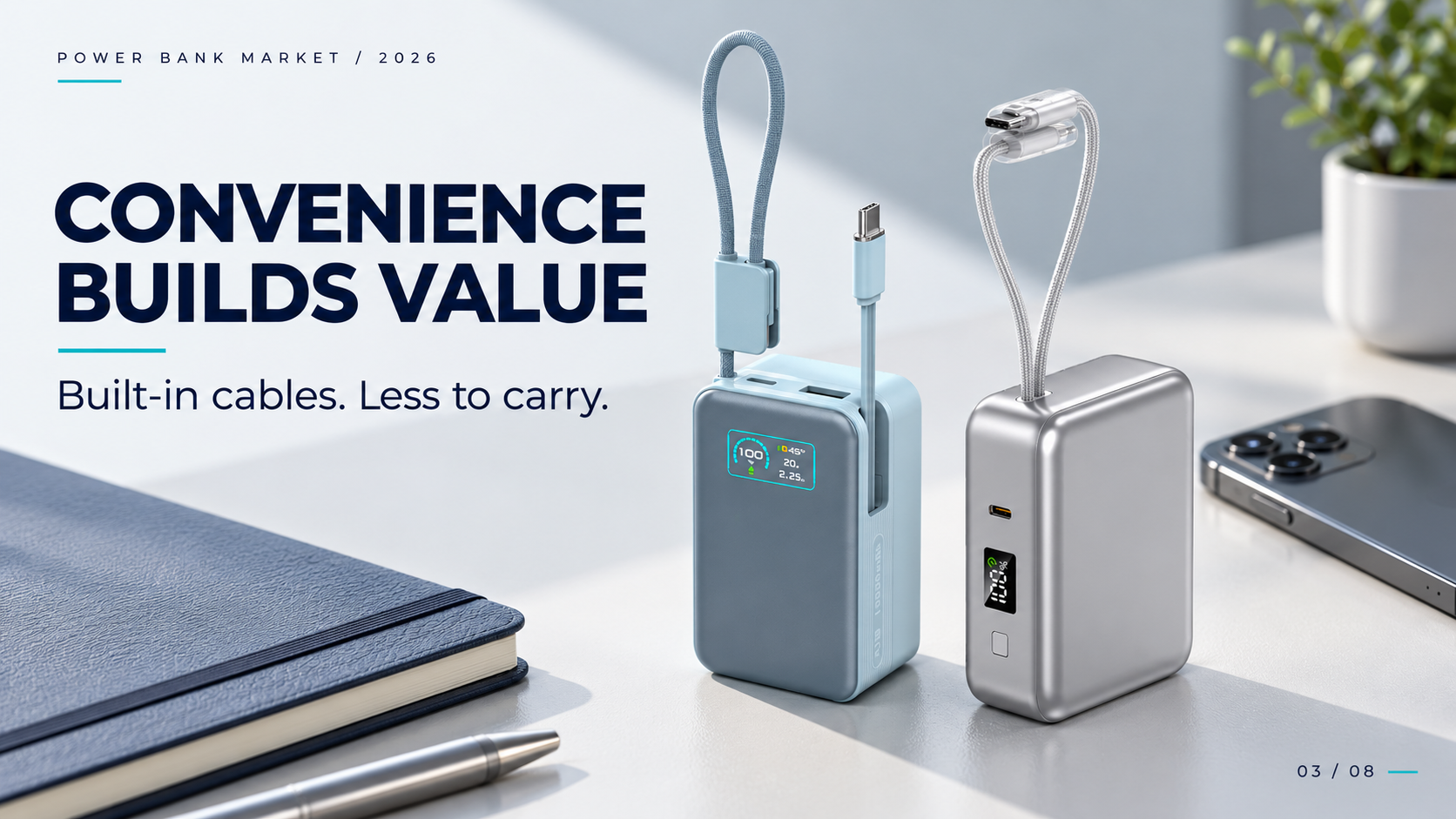
Built-in cables, compact bodies and readable battery displays offer a straightforward customer benefit: less friction in everyday use.
A commuter may value a lightweight product with an integrated cable more than extra capacity. A frequent traveler may prioritize clear energy labeling and portability. A business user may need verified charging compatibility across several devices.
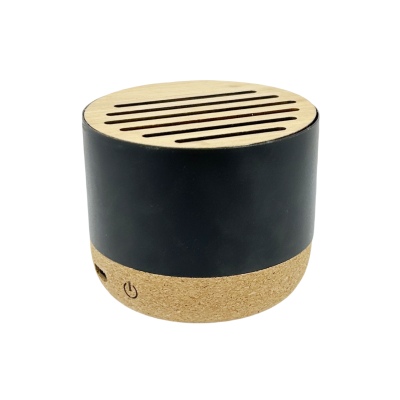
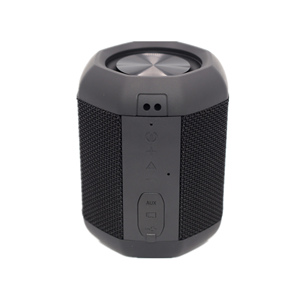
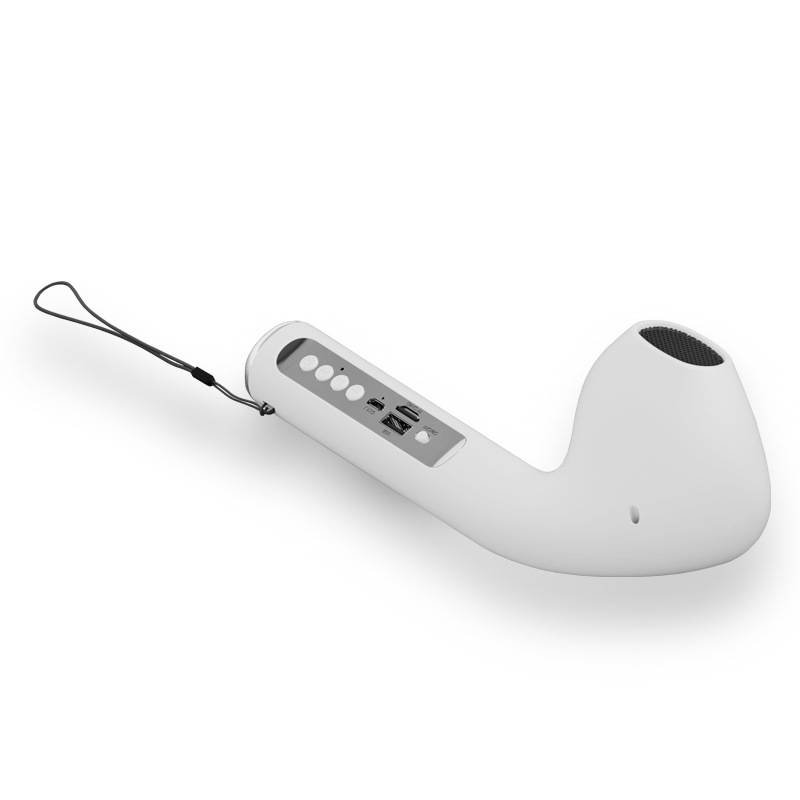
The accompanying product images illustrate several design formats. They do not establish independently verified capacity, charging performance or certification.
USB-C expands the range of useful applications
The European Commission's common-charger requirements have applied to several categories of portable electronics since December 28, 2024, and to laptops since April 28, 2026.
That supports a broader ecosystem of USB-C devices and accessories. It also gives suppliers a reason to test two distinct product propositions: compact phone-focused power banks and higher-power products for compatible tablets or laptops.
This is an ecosystem trend, not a blanket statement that every power bank is covered by the same rule. For a laptop-focused product, advertised wattage alone is insufficient: charging protocols, sustained output, cable ratings and performance when multiple ports are used all need verification.
Wireless charging is evolving—but compatibility remains essential
The Wireless Power Consortium introduced Qi2 25W in July 2025, creating a new stage of standardized wireless charging.
For premium products, wireless convenience can support a compelling proposition when paired with manageable heat, practical dimensions and verified device compatibility.
However, magnetic attachment, suction-based attachment and Qi2 certification are different characteristics. A product's appearance does not establish its charging standard. Brands should communicate exactly what has been tested and certified.
Reliability belongs in the business model
The U.S. Consumer Product Safety Commission's recall of more than one million specific Anker power banks in 2025 illustrates the potential scale of battery-quality exposure.
For a supplier or private-label brand, cell traceability, batch records, product testing and a workable after-sales process affect commercial performance as much as the initial purchase price.
Travel products also need accurate information. IATA issued updated power bank guidance following the March 2026 ICAO changes. Capacity markings and current airline requirements should be checked before making travel-related claims.
Seven markets, several different entry hypotheses
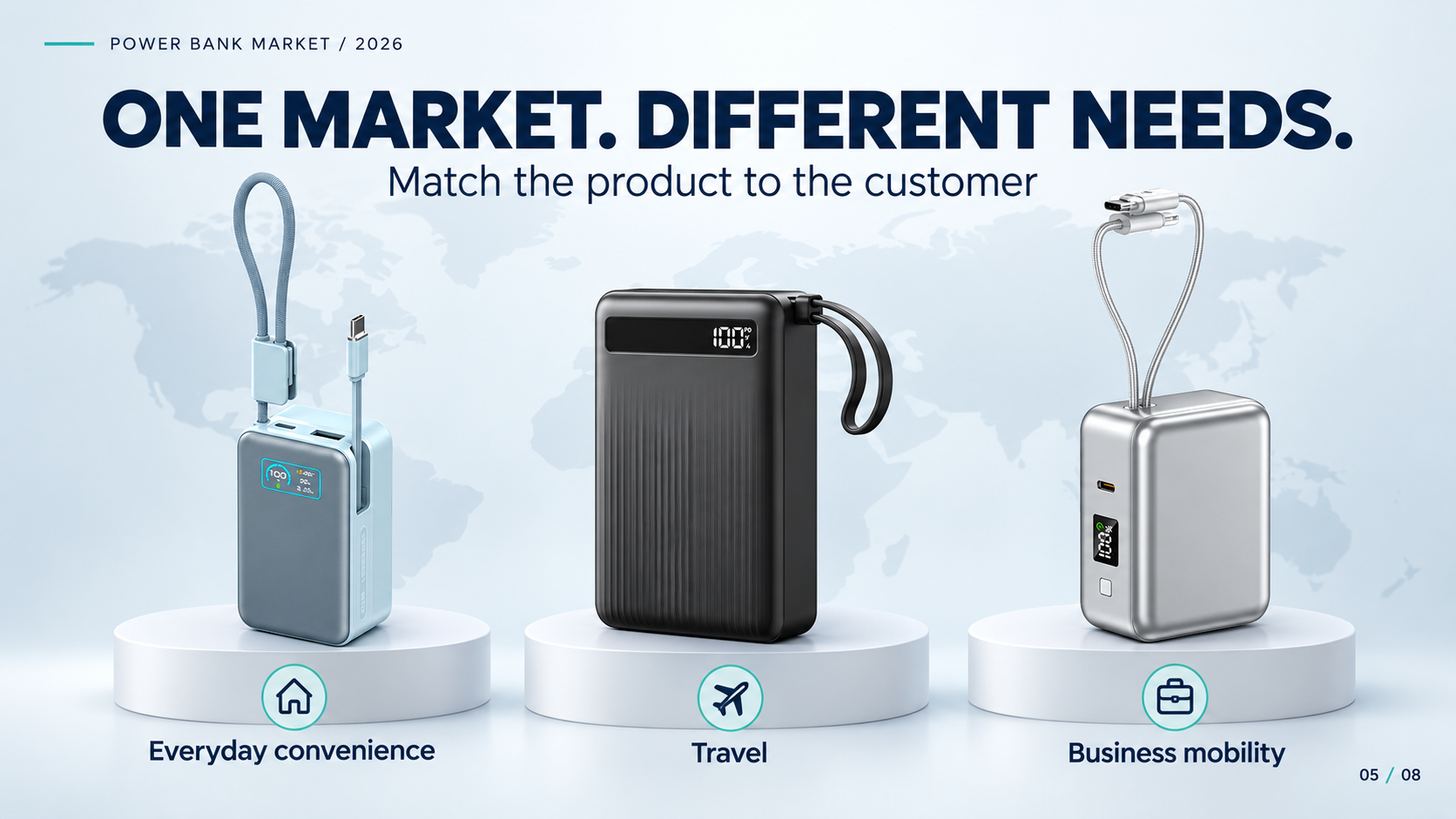
The following opportunities are commercial hypotheses to validate, not rankings derived from verified 2026 year-to-date unit sales.
Europe: Test compact USB-C products for everyday use and verified higher-power models for business mobility. Retailer private-label supply may be worth exploring where certification, documentation and after-sales service are strengths. Fortune forecasts approximately US$4.38 billion in regional market revenue for 2026; this is a full-year forecast and includes Russia in its regional coverage.
North America:Test certified wireless products and higher-power multi-device models. The key question is whether differentiation can cover customer-acquisition costs, returns and warranty expense. Fortune forecasts approximately US$2.85 billion in regional market revenue for 2026, with Mexico included in its coverage.
South America: Start with one country and a local distribution partner. Affordable wired fast-charging products are a reasonable proposition to test, but landed cost, import expenses and payment terms should determine the initial assortment.
The Middle East:Test compact premium designs, travel-oriented products and corporate-gifting opportunities in selected countries such as the UAE and Saudi Arabia. Validate thermal performance, packaging expectations and local service requirements before scaling.
Southeast Asia: Test accessible wired fast-charging products with built-in cables for everyday charging. Product cost advantages must survive platform fees, promotions, delivery expense and warranty claims. A low price alone does not establish a profitable opportunity.
Russia:There is a useful public category signal: M.Video's market analysis reported that power banks accounted for 29.5% of mobile-accessory revenue in Q1 2026, up from 25.9% a year earlier. This is a revenue-share measure, not a unit-sales growth rate. Test dependable capacity and fast-charging propositions with local partners, alongside payment, logistics and applicable trade requirements.
Australia: Test lightweight travel products and reliable multi-device charging formats. IMARC estimates the 2025 market at US$259 million, although its scope also includes battery cases. Small-batch testing can help assess whether customers will pay enough to cover delivery and local support.
Start with three product lanes
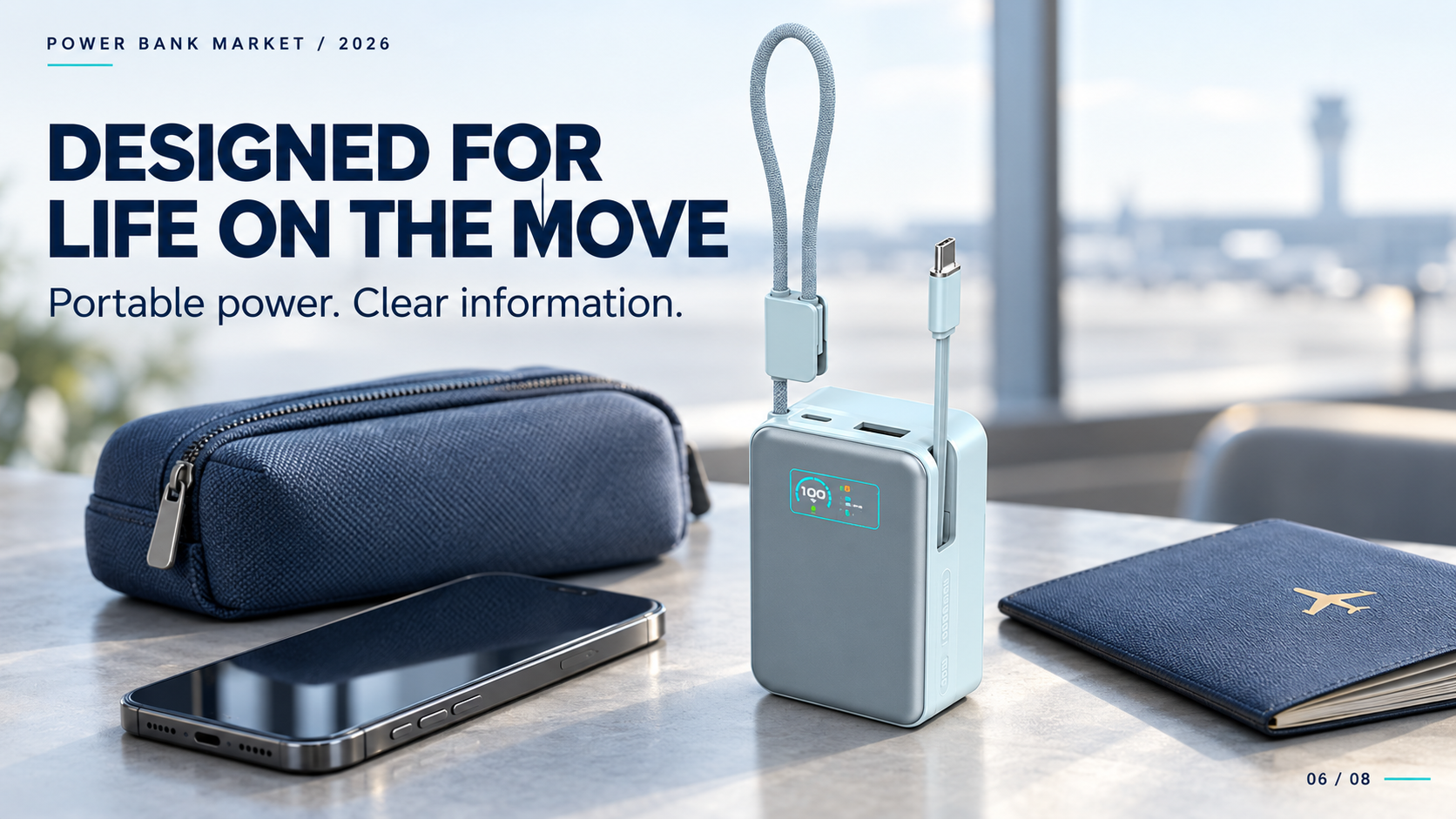
An initial assortment can be organized around three customer needs:
1. Everyday charging: a compact 10,000mAh wired product with approximately 20–30W output and a durable built-in USB-C cable.
2. Wireless convenience: a 5,000–10,000mAh product with verified wireless compatibility and certification appropriate to its claims.
3. Business mobility: a 20,000mAh product with verified 65–100W output and compatibility with selected laptops or tablets.
These are proposed sourcing specifications, not confirmed capabilities of the products pictured.
Choose one country, a small number of models and a limited initial order. Track conversion, returns, failure reasons and reorder demand before expanding the range.
Calculate contribution per unit using actual receipts minus product cost, freight, import expenses, channel fees, advertising and returns or warranty costs. Growing revenue is only useful when the economics support the next order.
Which customer need is driving your next power bank range: everyday convenience, wireless charging or business mobility?
Sources and scope
- Fortune Business Insights: Power Bank Market — global and regional full-year revenue forecasts.
- Grand View Research: Power Bank Market— alternative global market estimate.
- European Commission: The EU Common Charger — covered devices and application dates.
- Wireless Power Consortium: Qi2 25W Announcement — wireless standard announcement.
- CPSC: Anker Power Bank Recall — recall evidence.
- IATA: 2026 Power Bank Guidance— aviation guidance.
- M.Video: Q1 2026 Mobile Accessories Analysis — Russian revenue-share signal.
- IMARC: Australia Power Bank Market— 2025 market estimate and product scope.
 What Makes A Bluetooth Charger Best Manufacturer Shortlist Defensible?
 You May Also Like


 Tel
Tel
 Email
Email
 Address
No.602,BldA Shanhai Building,Bantian Street,Longgang District,Shenzhen City,Guangdong Provice,China