 Home
HomeWhat Should A Custom Bluetooth Speaker Brief Define Before Sampling?
 Sep 11,2026

 MiBA
MiBA
A custom bluetooth speaker brief should define measurable product, artwork, packaging, compliance, sample, and production requirements before pricing. It should identify what is fixed, what may remain configurable, who owns each decision, and what evidence makes a sample acceptable.
Begin With One Use Case And One Decision Hierarchy
Start with the intended use, sales channel, operating conditions, and order objective. Promotional, retail, hospitality, and outdoor programs create different priorities for sound, durability, packaging, documentation, and landed cost.
Describe The Environment Before Selecting Hardware
State listening distance, exposure, session duration, storage, charging context, portability, and handling risk. For Germany or another EU market, identify the destination in the compliance workstream so radio, charging, battery, language, and importer-information requirements can be flagged early. This gives each supplier the same boundary for OEM speaker customization.
Lock The Technical Baseline Before Artwork
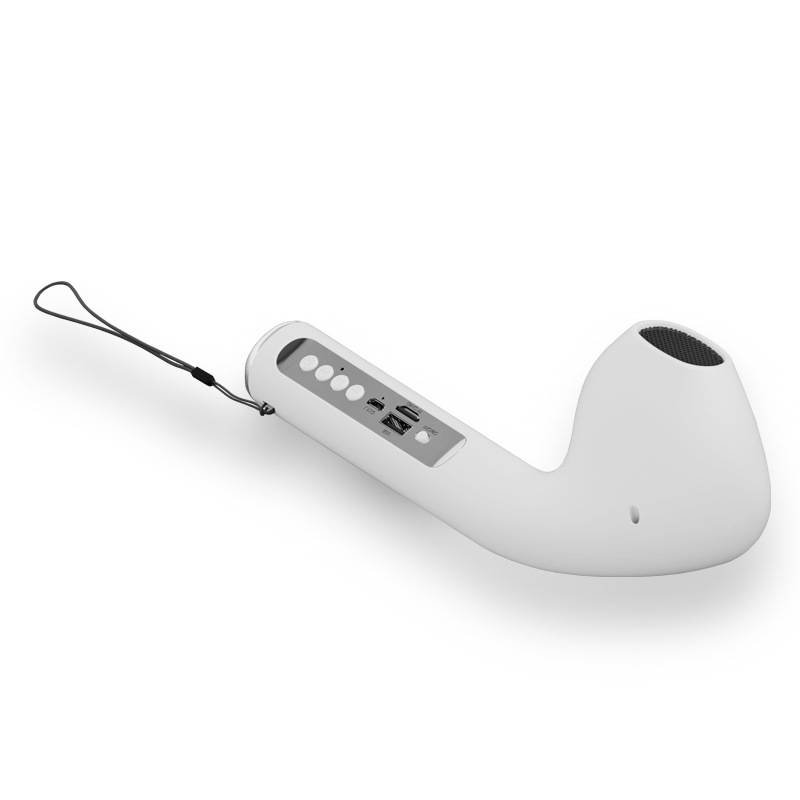
A technical baseline covers audio, wireless behavior, power, controls, interfaces, materials, dimensions, and accessories. The MS037 product page currently lists a 3 W output, Bluetooth 5.0, a 400 mAh battery, ABS and fabric construction, several inputs, and front-mesh printing. These are one model's stated values, not defaults for another program.
Define Acoustic Performance As A Test Condition
“Good sound” is not an acceptance criterion. Record the source, connection mode, volume, distance, content, enclosure state, and limits for distortion, rattling, imbalance, or noise. Identify the instrument and tolerance for any acoustic target, plus required voice prompts, microphone, passive radiator, pairing, or equalization. A custom bluetooth speaker sample can then be judged against one repeatable setup.
Treat Runtime, Charging, And Battery As A System
Battery capacity alone does not predict runtime. Define playback volume, program, connection mode, indicators, charging time, standby, protection, cable, and charger range. EU common-charger rules apply to portable speakers from 28 December 2024, so confirm current USB-C design and packaging-information requirements with qualified specialists. This matters when an older reference page lists Micro USB: portable speaker compliance follows the current market design, not a legacy description.
Translate The Approved Sample Into Production Controls
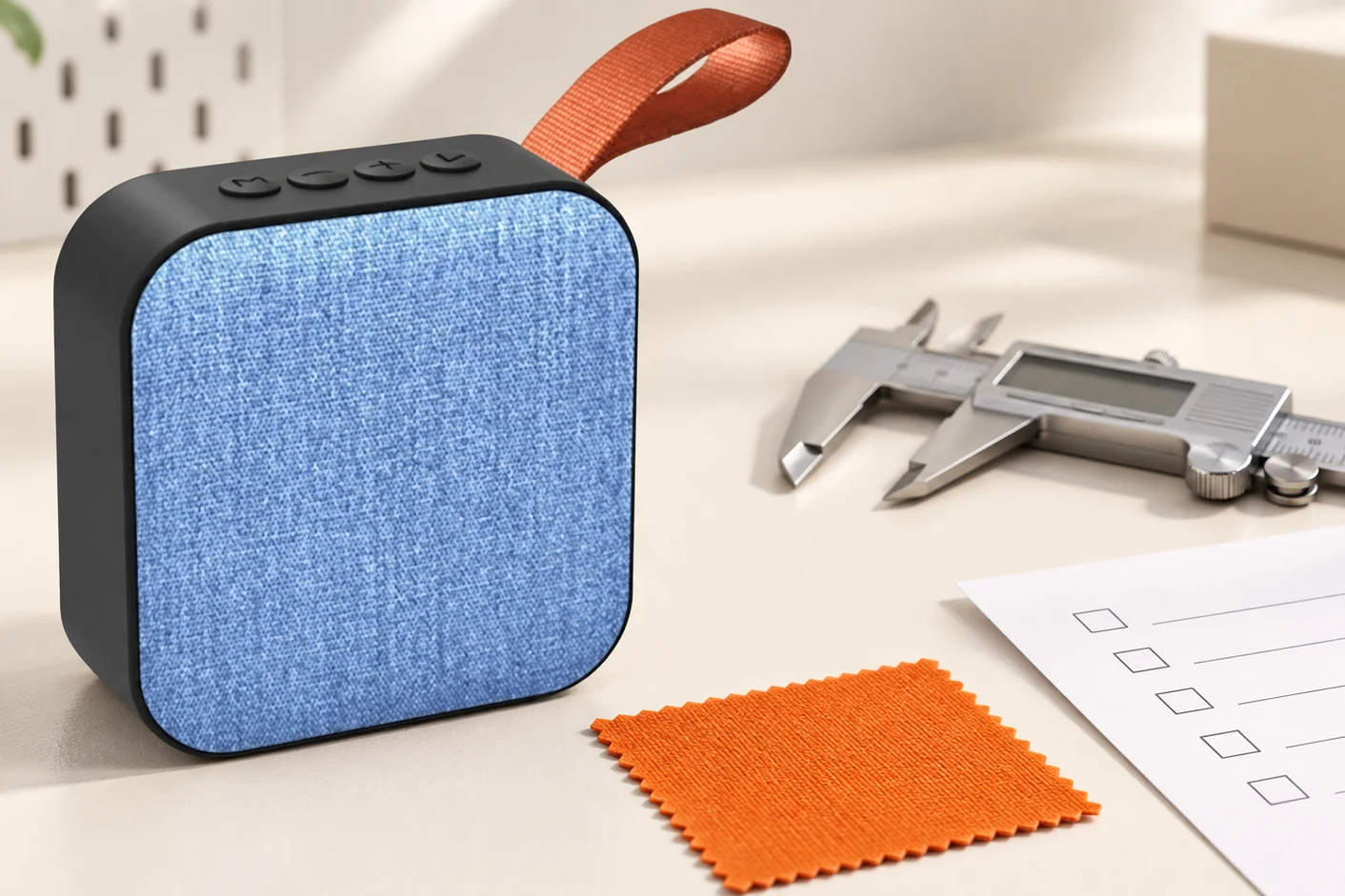
Sample approval starts repeatability control. Freeze a golden sample, signed specification, bill-of-materials status, artwork, firmware, color reference, packaging construction, and test plan. Require a documented deviation and approval for later substitutions.
Define Incoming, In-Process, And Final Checks
Incoming checks should cover cells, drivers, enclosures, fabric, connectors, and printed packaging. In-process checks can verify assembly, soldering, firmware, controls, charging, and cosmetics; final inspection adds packing, barcode, carton, and reliability checks. The same-site factory page shows production scenes, but the order still needs written checkpoints, sampling rules, records, and escalation paths.

Specify Packaging As Protection, Information, And Cost
Packaging protects the speaker, carries information, shapes presentation, and affects freight. Identify the selling unit, inner pack, master carton, insert, cable and manual placement, barcode owner, languages, marks, and pallet assumptions.
Start With Pack Structure And Distribution Hazards
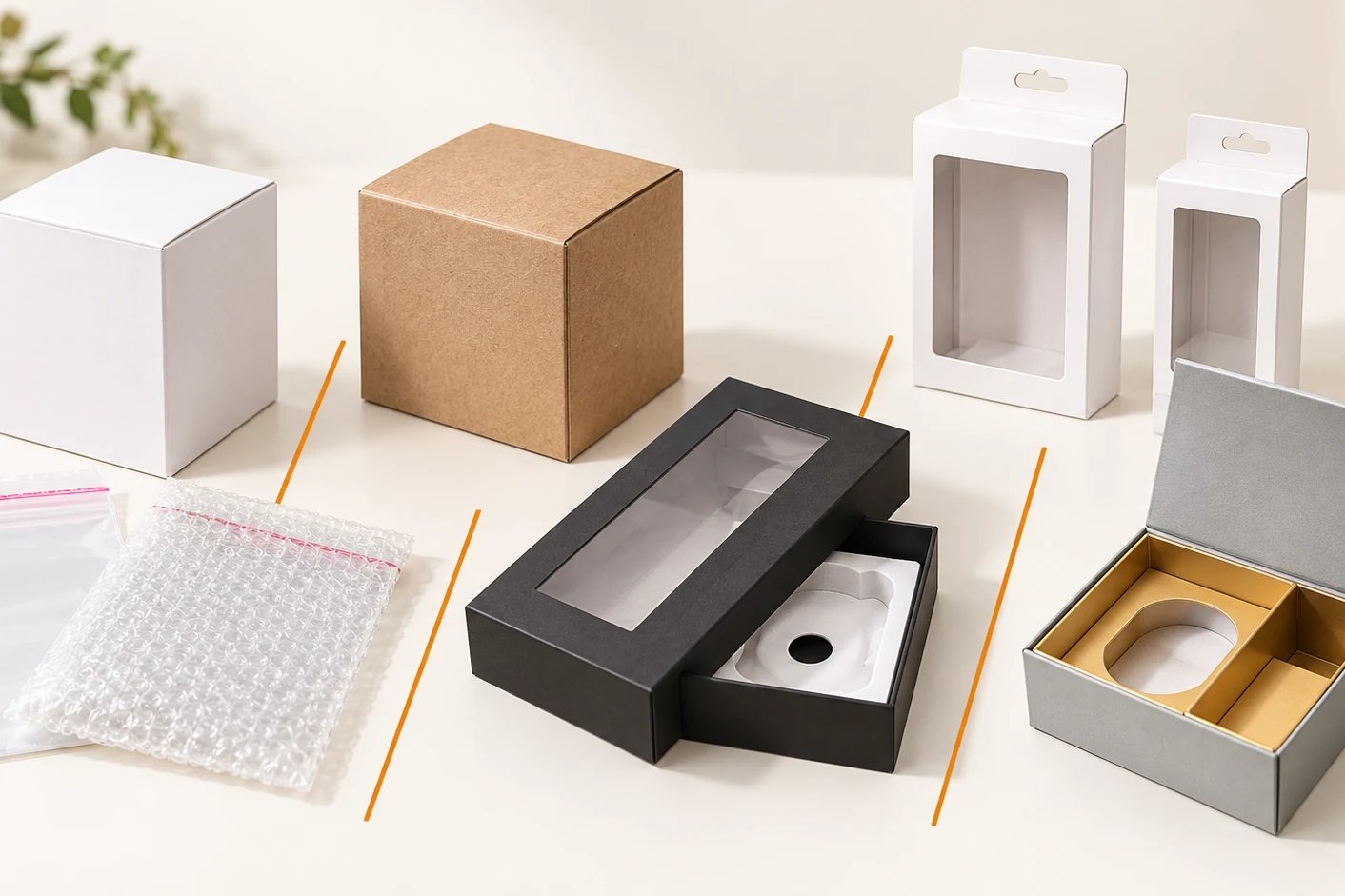
List expected parcel, case-pack, pallet, and warehouse handling. Then define whether the design needs a paperboard insert, molded tray, protective bag, gift box, window carton, or carry case. State dimensional tolerances and a target packed weight, and ask suppliers to explain void space and movement control. The site's product range and MS037 page show several packaging concepts, but every structure still requires project-specific confirmation for speaker size, accessories, shipping route, and drop-test method.
Assign ownership for model and rating information, importer details, recycling symbols, battery information, barcode, instructions, warnings, and translations. Claims about recycled content, waterproofing, certification, or compatibility need evidence before print approval, so packaging does not outrun portable speaker compliance review.
Freeze Artwork Zones, Finishes, And Color Standards
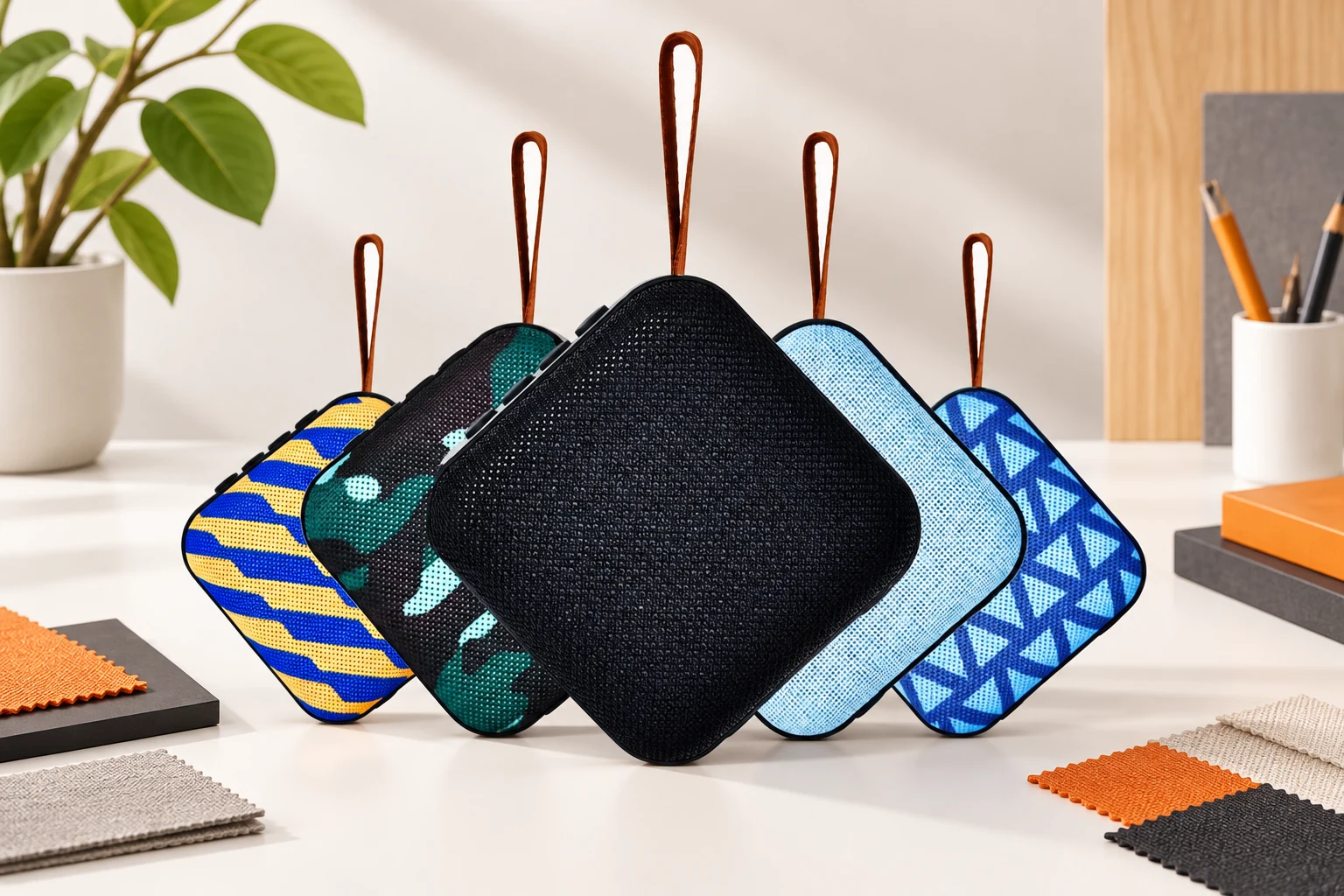
Customization should be described as a controlled surface system. Identify each printable or moldable zone, its maximum area, prohibited regions, artwork orientation, expected viewing distance, texture, and finish. Confirm whether the method is UV printing, pad printing, screen printing, laser marking, woven treatment, coating, or a supplier-proposed alternative. OEM speaker customization is successful when the technique is matched to substrate, geometry, abrasion exposure, quantity, and color expectation.
Use Production-Ready Artwork Instead Of A Screenshot
Provide vector artwork when the process requires it, outline fonts or include licensed files, define spot colors or an agreed color system, and show minimum line and gap widths. Note whether gradients, full bleed, metallic effects, or fine text are allowed. A digital rendering is useful for placement, but it does not prove ink density, fabric interaction, edge sharpness, or color under real lighting. The custom bluetooth speaker approval set should include both the source artwork and photographed or physical approval evidence.
Build Compliance Evidence Into The Development Plan
Compliance cannot be added as a logo at the end. Determine the rules for the finished configuration, market, charger arrangement, battery, radio design, packaging, and claims. The evidence plan should name each document, owner, model covered, test configuration, date, and review status.
Connect Radio Evidence To The Marketed Identity
The Bluetooth SIG states that products using the technology must complete the applicable qualification process before market introduction and that marketed names and model numbers should match the record. Private-label buyers should decide who holds membership and Bluetooth qualification responsibility, how the finished identity will be represented, and whether the design is unchanged. This process does not replace EU radio-equipment conformity assessment.
Review The Finished Configuration, Not A Similar Model
EU radio-equipment rules place responsibility on the manufacturer for conformity of the equipment, supported by technical documentation and the applicable assessment route. Battery rules also cover batteries incorporated into products and introduce sustainability, safety, labelling, information, and end-of-life duties. Ask whether reports, declarations, schematics, component records, labels, and manuals identify the exact custom bluetooth speaker configuration. A report for a similar enclosure, battery, antenna, firmware, or charger arrangement may be useful background but should not be treated automatically as finished-product evidence.
| Brief Block | Minimum Decision | Evidence Before Approval | Typical Open Risk |
|---|---|---|---|
| Use case | Environment, channel, runtime, handling | Signed requirement summary | Features conflict with the real scenario |
| Audio and radio | Test setup, functions, connection behavior | Sample record and identified design | Subjective approval or unmatched Bluetooth qualification |
| Power system | Runtime condition, cell, protection, USB-C | Charging tests and component records | Legacy port or unclear charger information |
| Artwork | Zone, process, color, tolerance | Controlled files and signed physical result | Mockup differs from production print |
| Packaging | Structure, pack count, marks, languages | Dieline, pack sample, logistics test | Damage, missing data, or freight inefficiency |
| Production | Golden sample, test gates, change control | Inspection records and deviation log | Unapproved substitutions or drift |
Design Speaker Sample Testing Around Decisions
Each sample round should answer named questions. An appearance sample may prove dimensions, color, and print placement without final electronics; an engineering sample may test audio, wireless, power, and firmware; a pre-production sample should represent approved materials, tooling, artwork, and packaging. Label samples clearly so a visually correct mockup is not mistaken for production-ready evidence.
Use A Pass-Fail Sheet With Conditions And Instruments
For every test, record the method, equipment, settings, environment, sample identity, result, acceptance limit, owner, and disposition. Speaker sample testing can include pairing and reconnection, control response, maximum-volume artifacts, charging, runtime under a defined program, standby, call function where applicable, input modes, surface wear, drop or vibration, pack integrity, and visual inspection. The list should match the intended use; unsupported tests create paperwork rather than confidence.
Compare Quotations Only After Normalizing Assumptions
Compare prices only for the same configuration and commercial boundary. Issue one controlled brief and require a deviation list. Separate tooling, artwork setup, samples, packaging, evidence work, freight terms, payment terms, and volume breaks. Confirm MOQ and lead time for the chosen finish, components, packaging, and season.
The RFQ attachment should include requirements, artwork, markets, quantities, trade term, sample stages, tests, document list, packaging, dates, and change control. Use the project contact page to request line-by-line status. The goal is a transparent custom bluetooth speaker proposal whose assumptions can survive production.
Frequently Asked Questions
What belongs in the first custom speaker brief?
Include use case, market, quantities, size and material limits, audio and radio functions, charging rules, artwork zones, packaging, evidence, sample stages, acceptance tests, timing, and a distinction between fixed requirements and supplier proposals.
Should a buyer choose a model before defining the brief?
A reference model can accelerate discussion, but use case and acceptance criteria come first. Otherwise the buyer may inherit unsuitable runtime, ports, materials, controls, or packaging. Use the site's product and factory videos for context, then confirm project details in writing.
Does a Bluetooth test report cover an EU market launch?
No single report covers every obligation. Bluetooth qualification addresses its technology and brand program, while EU radio, charging, battery, labelling, documentation, language, importer, and other rules may apply. Review evidence for the finished configuration and responsible operator.
How many sample rounds are necessary?
There is no universal number. Separate rounds for appearance, engineering function, reliability, packaging, and pre-production conformity when needed. Material, firmware, battery, antenna, artwork, tooling, or packaging changes can justify another controlled sample.
What is the most important final approval record?
The most useful record is a reconciled approval pack: golden sample identity, specification revision, artwork, firmware, bill-of-materials status, packaging files, test results, evidence index, accepted deviations, and sign-off owners. It turns the brief from an email into a production control. For broader context, the company profile and technical blog archive can inform questions, but the order-specific approval pack remains decisive.
For an evaluation-stage inquiry, send the controlled brief, artwork, market list, quantities, sample plan, and evidence matrix together, then ask the supplier to return a line-by-line confirmation and deviation register before quotation approval.
 How Do TWS Bluetooth Earphones Coordinate Two Buds, And Which Specs Matter?
 You May Also Like


 Tel
Tel
 Email
Email
 Address
No.602,BldA Shanhai Building,Bantian Street,Longgang District,Shenzhen City,Guangdong Provice,China