
 Home
HomeWhich Decisions Keep A Custom Bluetooth Speaker Consistent From Sample To Shipment?
 Sep 14,2026

 MiBA
MiBA
A custom bluetooth speaker stays consistent from sample to shipment when the buyer and manufacturer lock decisions in the right order and attach each approval to measurable evidence. For German procurement managers, distributors, and wholesalers, the practical challenge is not choosing a colour in isolation. It is controlling acoustic targets, electronics, housing, artwork, qualification, production tests, packaging, and changes as one product definition. The framework below focuses on governance from approved sample through mass production; it does not assume that a website statement or attractive render is proof of a finished configuration.
Start With A Controlled Product Definition
Separate Fixed And Selectable Elements
Mark each element as fixed platform, selectable option, buyer artwork, or new development. Fixed items may include the acoustic chamber or core printed circuit board; selectable items may include colour, grille finish, cable, or gift box; artwork includes logos, labels, manuals, and carton marks. New development should receive its own feasibility, tooling, schedule, and test plan. This distinction keeps OEM speaker development from becoming an uncontrolled mixture of familiar components and unverified changes.
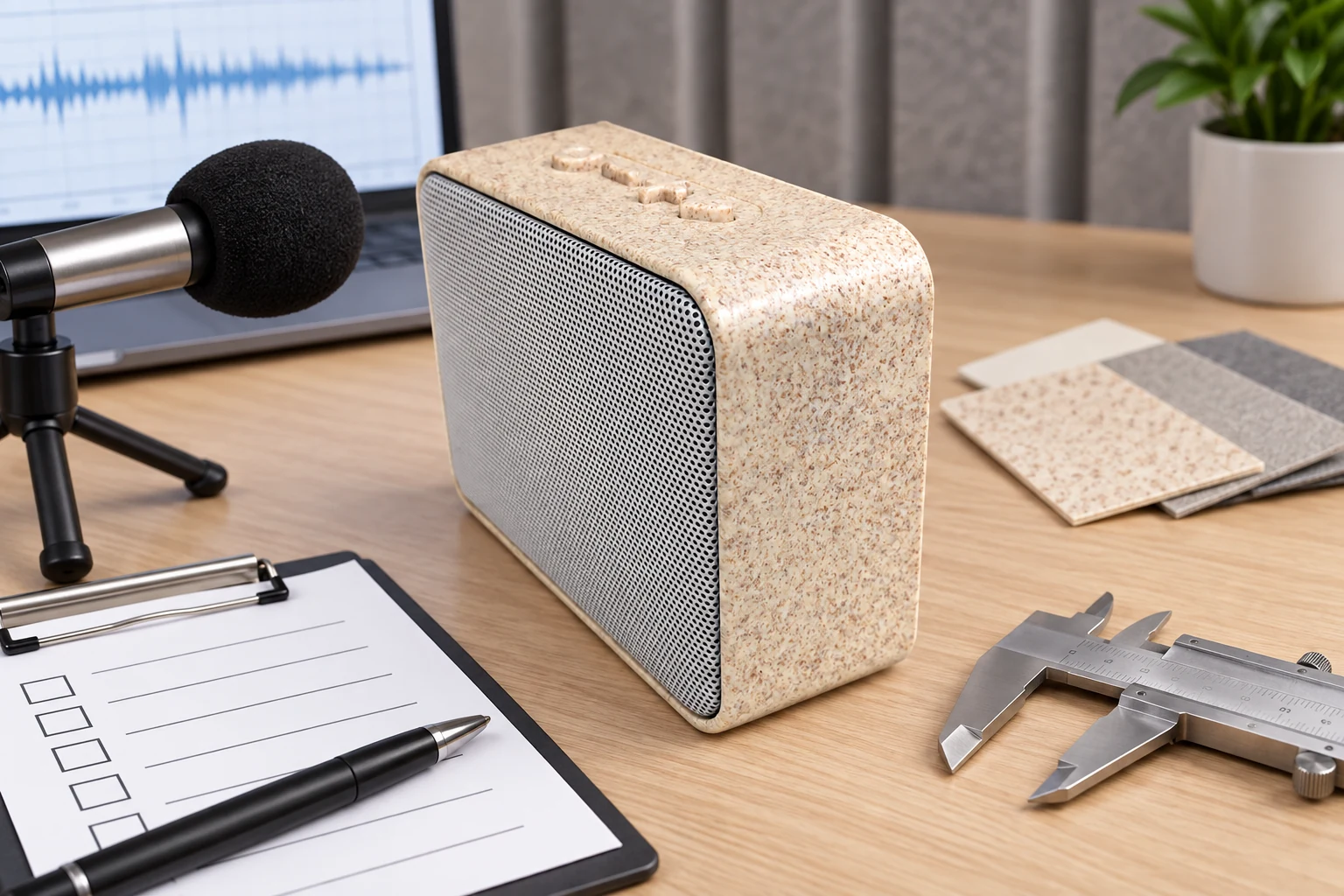
Freeze Function Before Cosmetics
Write Acoustic And Electrical Targets
Document the driver, amplifier configuration, enclosure volume, passive element if used, tuning revision, rated input, battery configuration, charging input, maximum current, standby behavior, low-battery warning, protection functions, and firmware version. Define how output, frequency response, distortion, playtime, charge time, and standby current will be measured. The goal is repeatability, not a single impressive laboratory result. Test conditions, device settings, media file, fixture, distance, and ambient noise should travel with the result.
| Decision Gate | Required Evidence | Approval Question |
|---|---|---|
| Architecture | Specification, block diagram, bill of material level | Are functions and interfaces frozen? |
| Engineering sample | Measured performance, firmware, issue register | Does the design meet defined conditions? |
| Golden sample | Signed unit, photos, colour data, approval matrix | Is the reference complete and reproducible? |
| Pilot run | Yield, test records, defects, corrective actions | Can the process hold the approved result? |
| Shipment | Inspection, traceability, packaging and release records | Does released stock match the order revision? |
Control Appearance, Materials, And Identity
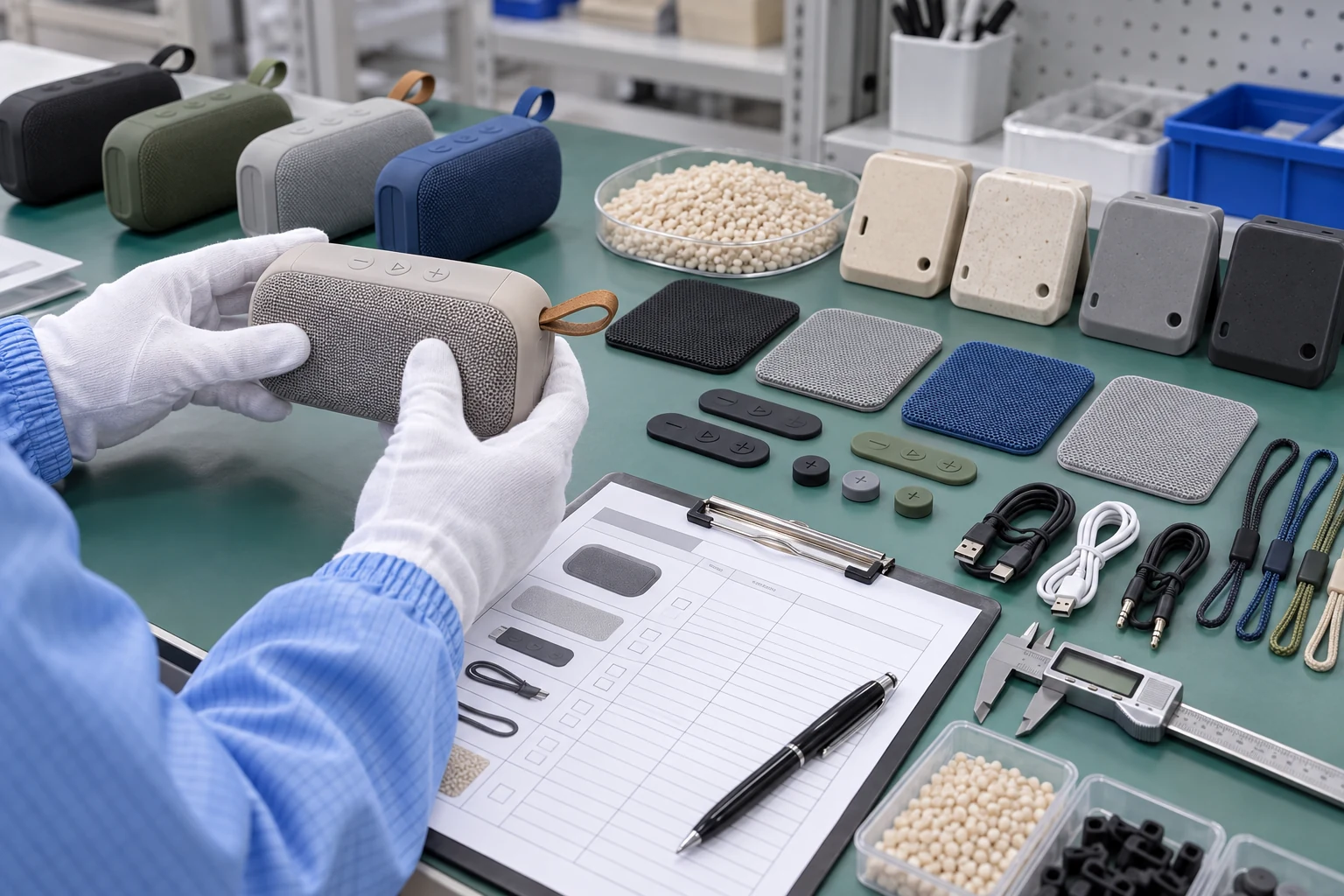
A reference sample must capture more than overall shape. Specify colour with an agreed standard and viewing condition; define gloss, texture, grain, grille pattern, joint gaps, button feel, print position, and acceptable cosmetic limits. Material names should be linked to grades or approved formulations where necessary. The buyer should also define whether environmental or recycled-content statements require supplier declarations, test evidence, chain-of-custody documentation, or independent verification for the target market.
Approve Logo And Artwork As Production Files
Provide vector artwork, colour values, dimensions, position drawings, print method, and edge clearances. Approve a physical sample under agreed lighting and record the process settings that matter. The exact product page for MiBA's MS154B wheat-straw speaker states that OEM UV printing is available on the front mesh; treat that as a supplier statement to confirm for the quoted configuration, artwork, quantity, durability test, and schedule. Never infer a logo placement from a generic catalogue image.
Link Material Approval To Change Control
Keep an approved material and component list with supplier, part number, specification, colour, revision, and alternates. Define which substitutions require buyer approval and which are managed by the manufacturer under equivalent criteria. For visible or acoustic parts, equivalence should include appearance and performance, not only dimensions. A change request should state reason, old and new part, affected tests, sample requirement, inventory exposure, price impact, and implementation lot.
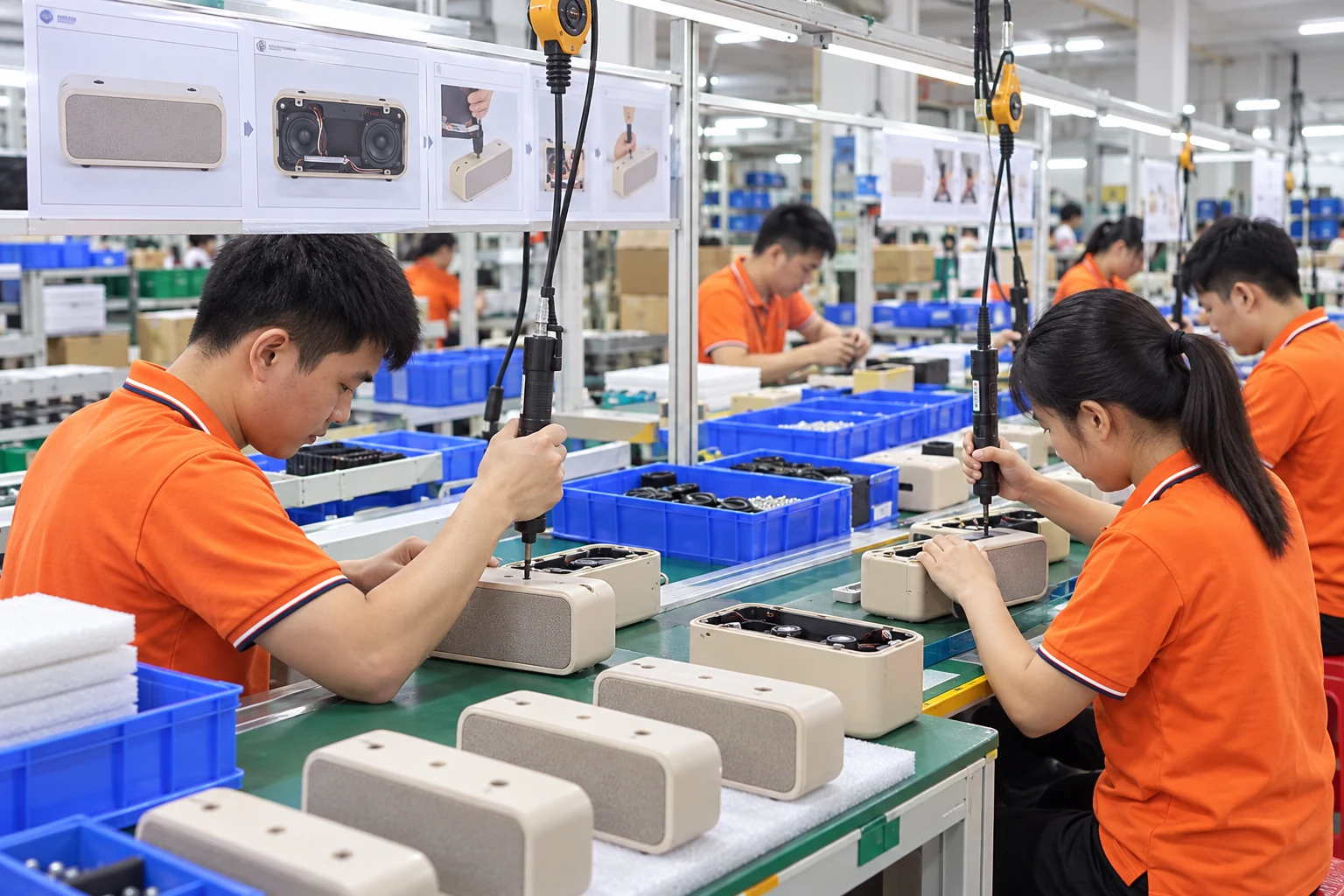
Use A Sample Ladder Instead Of One Sample
A custom bluetooth speaker passes through different samples because each level answers different questions. A visual model may establish proportions but not sound. An engineering unit may prove electronics but use temporary materials. A pre-production sample may represent intended parts and process. A golden sample is the mutually approved reference retained by both parties. State the purpose and limitations of each level so that the buyer does not approve shipment based on an early unit built outside normal production.
Turn Sample Comments Into Testable Closure
Use a numbered issue list with photographs, file references, severity, responsible party, due date, proposed action, verification method, and closure evidence. Comments such as “make it more premium” should be converted into choices the team can verify: a specific texture panel, revised grille finish, defined button force, corrected print position, or new colour master. These sample approval criteria should state what is accepted, not only what was disliked.
Protect The Golden Sample
Sign, date, photograph, seal, and label the golden sample with its project and revision. Store one with the buyer and one with the factory under suitable conditions. Link it to drawings, bill of materials, firmware checksum or version, acoustic data, colour master, artwork, accessory list, and packaging specification. Define which characteristics are judged by the sample and which require measured limits. A sample cannot replace dimensional, electrical, safety, or regulatory criteria.
Prove Production Readiness In A Pilot Run
For a custom bluetooth speaker, the pilot run tests the manufacturing process, not just the product design. It should use intended suppliers, tooling, work instructions, fixtures, software, operators, quality plan, and traceability. Record input quantity, output, first-pass yield, rework, scrap, defect categories, station cycle times, test failures, and corrective actions. The buyer should review unresolved issues and decide whether another pilot or targeted verification is necessary before mass production.
Define Station Controls And Release Limits
Map critical-to-quality characteristics to incoming, in-process, end-of-line, and outgoing checks. Examples may include material appearance, housing fit, fastener control, grille condition, electrical safety checks where applicable, charging function, Bluetooth connection, channel output, buttons, indicators, firmware, cosmetic inspection, and package contents. Each test needs a method, equipment, limit, sampling plan, record, and reaction rule. Calibrated equipment and controlled test software should be identifiable in the production record.
Qualify The Market Configuration
Bluetooth SIG requires products using Bluetooth trademarks to complete the applicable qualification process. Its quick-start guidance separates using an existing qualified design from creating or modifying a Bluetooth design, and the Qualification Program Reference Document defines program rules. The marketed product name and model information must align with the qualification listing as required by the program. Buyers should search the official Bluetooth product database and ask the manufacturer to identify the exact design path and listing for the finished configuration.
Treat Qualification As Configuration Control
Do not assume that a module logo or an unrelated declaration covers the finished item. Record the radio solution, hardware revision, firmware, design references, product name, model, brand owner, and qualification responsibility. MiBA's certifications page may help identify records to request, but each document still needs to be checked for model, revision, market, issuer, and validity. Ask what changes would require review or new work. Bluetooth qualification is not a substitute for all product safety, radio, electromagnetic compatibility, battery, chemical, labelling, accessibility, packaging, or local market obligations. For Germany and the European Union, obtain current professional compliance advice for the exact product and sales model.
Lock Packaging And Market Information
The custom packaging specification should include dielines, materials, print files, finishes, barcode data, labels, warnings, manuals, accessory placement, insert construction, carton quantity, carton marks, pallet rules, and transport tests. Verify that product name, model, importer or responsible-party information where applicable, symbols, language, and claims are consistent across the device, package, manual, listings, and qualification records. Conduct a physical pack-out review before approving mass printing.
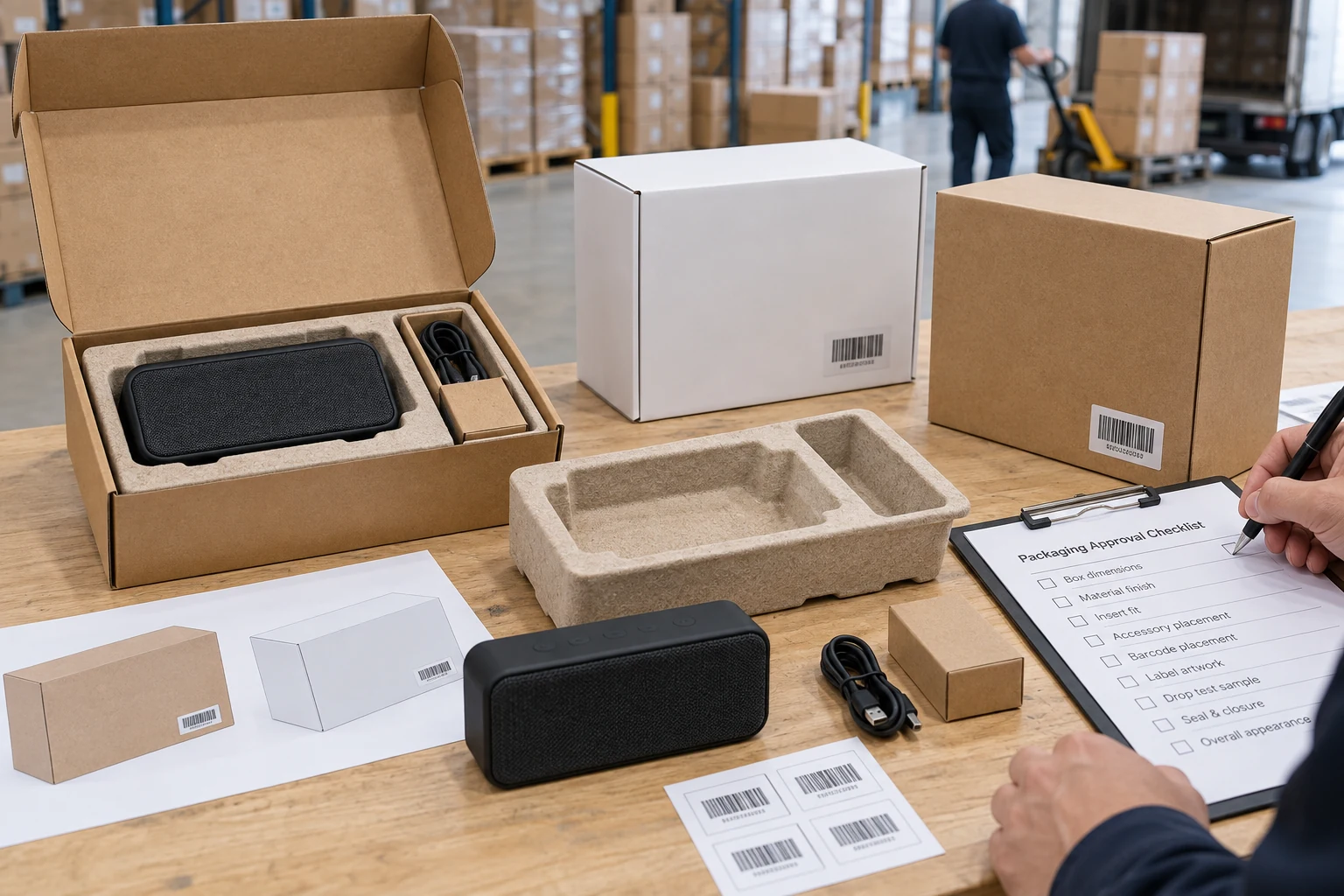
Release Shipment With A Complete Record
Close The Loop For Repeat Orders
Archive the released bill of materials, drawings, firmware, colour and artwork masters, golden-sample identity, test limits, packaging, inspection report, shipment lot, and open risks. At reorder, compare the new plan against that archive and request disclosure of component, supplier, process, software, tooling, or regulatory changes. Review MiBA's broader Bluetooth speaker category, an alternative fabric speaker page, and its factory overview for supplier-provided context. Use the site's download area only as a discovery point, then confirm every project-relevant capability with current records.
Frequently Asked Questions
When is a sample ready to become the golden sample?
Only after the team has closed critical issues and linked the unit to approved specifications, drawings, bill of materials, firmware, colours, artwork, accessories, tests, and packaging status. Record any characteristics that are still provisional rather than treating the whole unit as approved.
Can a buyer approve colour from a screen image?
A screen image can support discussion but should not be the final production reference. Use an agreed physical colour standard or approved master, define material, texture, gloss, and viewing condition, and record acceptable variation and measurement method where appropriate.
What is the main purpose of a pilot run?
It demonstrates whether the intended production system can repeatedly make and test the approved design. It also exposes fixture, instruction, material, staffing, cycle-time, traceability, and yield problems before the full order is committed.
Does Bluetooth qualification cover every German market requirement?
No. It addresses use of Bluetooth technology and trademarks under the Bluetooth SIG program. Other legal, safety, radio, environmental, battery, labelling, packaging, and market obligations may apply. Confirm them for the exact product with qualified advisers and current official sources.
How should substitutions be handled after approval?
Use a documented change request that identifies the old and new items, reason, affected characteristics, verification plan, sample need, inventory, timing, and commercial impact. Implement the change only after the designated approval path is complete.
Consistency is the result of linked decisions: a controlled definition, measured functional targets, approved physical references, production evidence, configuration-specific qualification, traceability, and disciplined change control. Buyers can use MiBA's quotation sheet or contact page to start a project-specific discussion, while keeping the final order conditional on an agreed evidence package rather than catalogue language alone.
 TWS Bluetooth Earphones Stay Predictable When Fit, Links, And Charging Are Tested
 You May Also Like


 Tel
Tel
 Email
Email
 Address
No.602,BldA Shanhai Building,Bantian Street,Longgang District,Shenzhen City,Guangdong Provice,China