 Home
HomeTWS Bluetooth Earphones Stay Predictable When Fit, Links, And Charging Are Tested
 Sep 14,2026

 MiBA
MiBA
TWS Bluetooth earphones stay predictable only when fit, wireless links, microphone conditions, and charging contacts are tested as one user journey.
Consistency Starts With The Conditions Of Use
A specification sheet describes capabilities, but listeners experience a chain of physical and wireless conditions. The same pair can sound balanced in a quiet room, thin after a poor seal, unstable beside crowded radios, or uneven when one bud did not charge. A useful evaluation therefore controls the conditions before it judges the result.
Fit Changes More Than Comfort
Earbud fit consistency affects bass response, perceived loudness, passive isolation, microphone position, and how firmly a bud remains seated during movement. A repeatable test should record tip size, insertion method, left-right fit, wearing duration, and the activities performed. Panel feedback is more useful when it separates pressure, looseness, heat, and acoustic seal instead of compressing everything into one comfort score.
Source Devices Must Be Part Of The Matrix
Phones, laptops, and operating systems can negotiate different profiles, codecs, controls, and reconnection behavior. The Bluetooth SIG's A2DP profile defines requirements for high-quality audio distribution, while actual product behavior still depends on the complete source-and-sink implementation. A receiving test should name the device model, software version, app, media type, and call platform so a failure can be reproduced rather than remembered as a vague complaint.
Wireless Link Tests Should Reproduce Real Movement
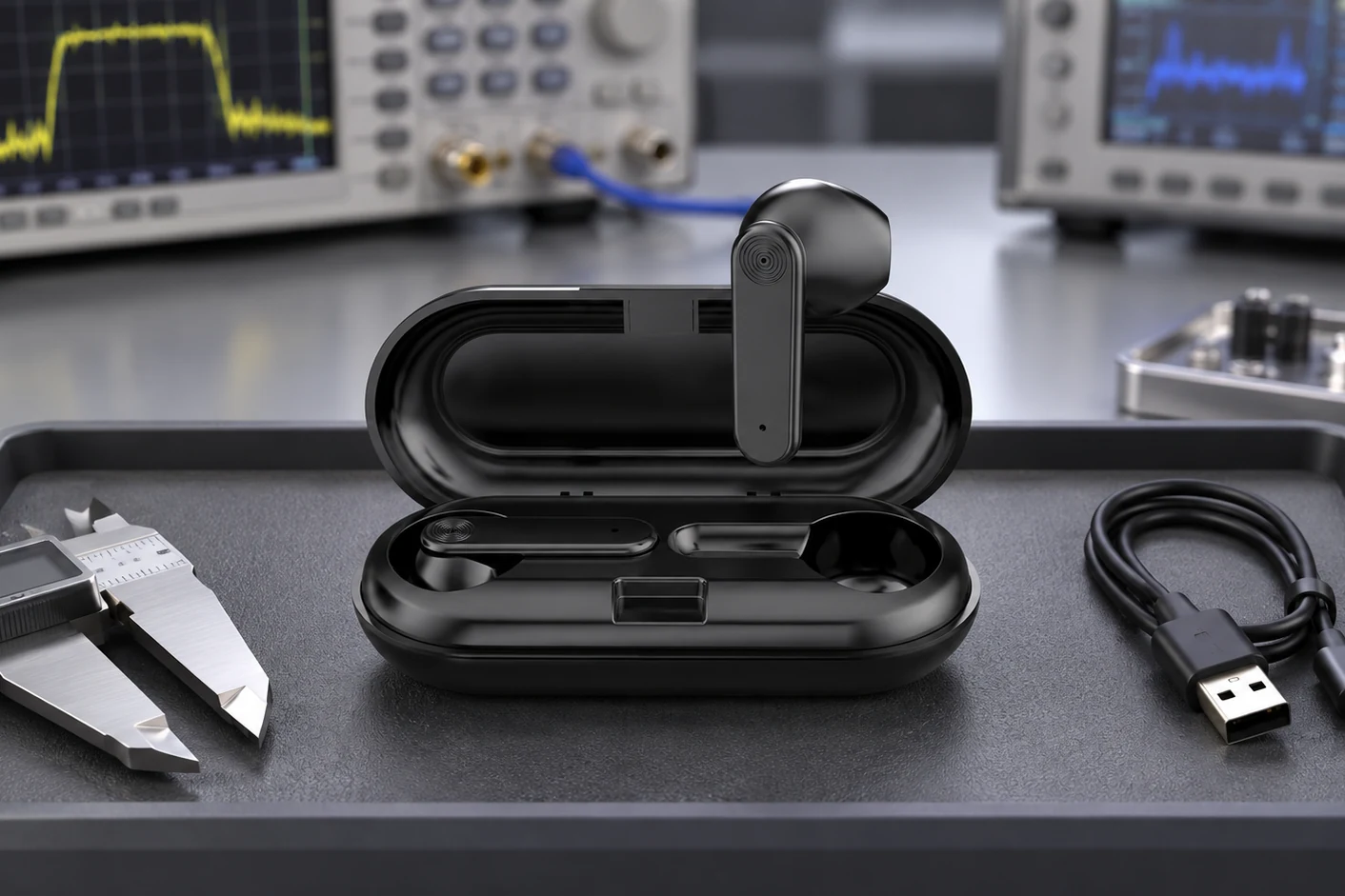
Wireless link stability is not established by pairing once on an empty desk. The test path should include pocket placement, head turns, walking, walls, nearby Wi-Fi activity, and transitions between quiet and crowded radio environments. Results should identify whether audio muted, distorted, desynchronized, or disconnected and whether recovery was automatic.
Pairing And Reconnection Are Separate Behaviors
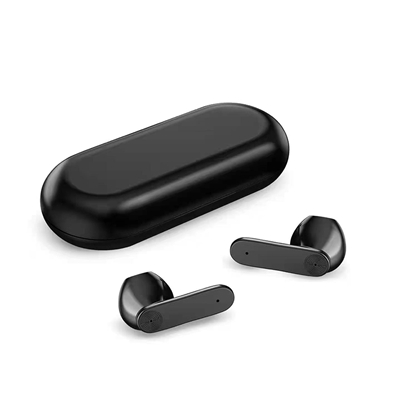
Initial pairing confirms discovery and association; reconnection tests what happens after the case opens, Bluetooth toggles, the source reboots, the buds move out of range, or another saved device is present. Record which bud becomes active first, whether both channels return, how long recovery takes, and whether manual intervention is needed. The Ultra Thin TWS Earbud page provides a concrete product context, but acceptance criteria should be written for the exact sample under review.
Audio Transport And Bud Coordination Need Distinct Checks
A continuous music test can reveal dropouts but may not expose call switching, mono use, left-right coordination, or control conflicts. Include media playback, calls, voice prompts, single-bud operation, and return-to-case sequences. Bluetooth LE Audio introduces a newer architecture with isochronous channels and multi-stream capabilities, yet a label such as Bluetooth 5.x by itself does not prove which audio features a product implements. Feature support should be verified from the declared design and observed behavior.
Microphone Performance Depends On The Scene
Microphone quality should be assessed with controlled speech, distance, head movement, and background conditions. Useful scenes include a quiet room, office chatter, road noise, wind, and a call with competing speakers. The receiver's intelligibility matters more than the talker's impression, so recordings or structured remote ratings should be retained where privacy rules allow.
| Test Area | Controlled Input | Observe | Repeat Condition | Useful Evidence |
|---|---|---|---|---|
| Fit and seal | Tip size and insertion method | Comfort, bass balance, retention | Left and right, seated and walking | Panel sheet with separate attributes |
| Wireless link | Device, software, distance, interference | Mute, dropout, recovery | Pocket, turn, wall, crowded radio | Timestamped event log |
| Calls | Script, noise scene, platform | Intelligibility and switching | Quiet, office, road, wind | Receiver rating or recording |
| Charging | Known battery state and cable | Contact, indication, full cycle | Multiple insertions and both buds | Cycle log and failure photos |
| Controls | Defined tap and hold actions | Recognition and false triggers | Dry hands, movement, single bud | Action-by-action checklist |
The table creates comparable observations without pretending that one laboratory score describes every listener. Limits, sample size, and test duration should remain visible beside results.

Charging Reliability Is A Mechanical And Electrical Question
Charging contact reliability depends on case geometry, spring pressure, contact cleanliness, bud seating, magnets, indicator logic, cable quality, and battery state. A bud that appears stored but does not make contact may be empty when the user returns. Inspection should therefore include repeated insertion, gentle case movement, visual indication, measured charging behavior, and left-right state after a complete cycle.
Contact Tests Should Include Normal Contamination
Clean laboratory samples establish a baseline, but oils, lint, and minor misalignment are common in normal use. A controlled robustness check can introduce defined, safe conditions without damaging the sample and then verify whether cleaning instructions restore operation. The goal is not to create an unrealistic torture test; it is to determine how visible, diagnosable, and recoverable a missed contact will be for the user.
Battery Claims Need A Declared Test Method
Playback duration varies with volume, content, codec, radio conditions, calls, temperature, and battery aging. Record the start state, volume reference, source device, media loop, endpoint, and whether the case was included. Avoid converting one sample result into a universal promise. MiBA's product directory shows multiple categories and models; results from one model should not be transferred to another without evidence.
Controls And Daily Transitions Reveal Hidden Friction
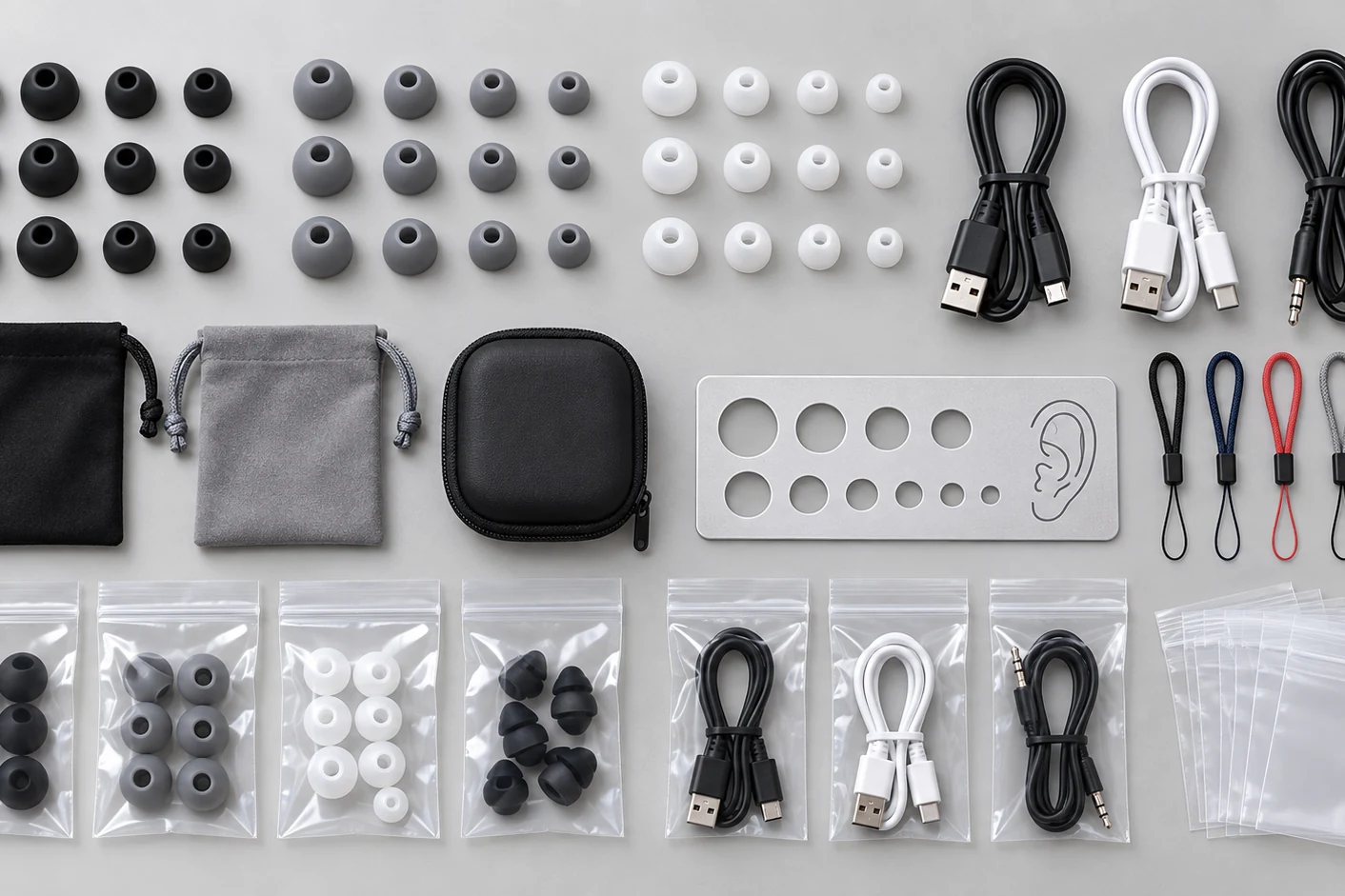
TWS Bluetooth earphones are repeatedly removed, tapped, paused, switched between media and calls, used one bud at a time, and returned to a case. These transitions deserve their own test script because many intermittent faults occur between stable states rather than during continuous playback.
Touch Controls Need An Action Map
Write every promised action in a matrix: play, pause, volume, track change, call answer, call reject, voice assistant, and power behavior. Then verify the tap count, hold duration, left-right assignment, feedback tone, and false-trigger rate. Gloves, wet fingers, hair, and repositioning may affect recognition. A clear user instruction is part of the outcome because a control that works only with undisclosed timing will still produce returns.
Single-Bud Use Should Return Cleanly To Stereo
Test either bud alone, swap active sides, place one bud in the case, remove it again, and return to two-channel playback. Confirm call microphone selection, control availability, battery reporting, and channel restoration. The result should identify intentional limitations separately from faults. The Bluetooth earphone category helps locate comparable models, while each model needs its own declared behavior.
Sampling Links Factory Evidence To Receiving Inspection
A distributor cannot inspect every long-duration behavior in every unit, so the control plan should separate factory process checks, lot sampling, and incoming verification. Critical functions, cosmetic limits, package contents, firmware identification, and traceability should use agreed defect definitions. Sample quantity and acceptance rules must be set before results are known.
Golden Samples Need Version Control
A golden sample is useful only when its hardware, firmware, acoustic tuning, accessories, color, markings, and packaging revision are identified and retained. Photographs can support the record but do not replace a controlled physical sample. MiBA's factory overview provides site context; a purchase program still needs the exact inspection plan, approved sample, and change-authorization route.
Packaging Checks Should Protect The Product Journey
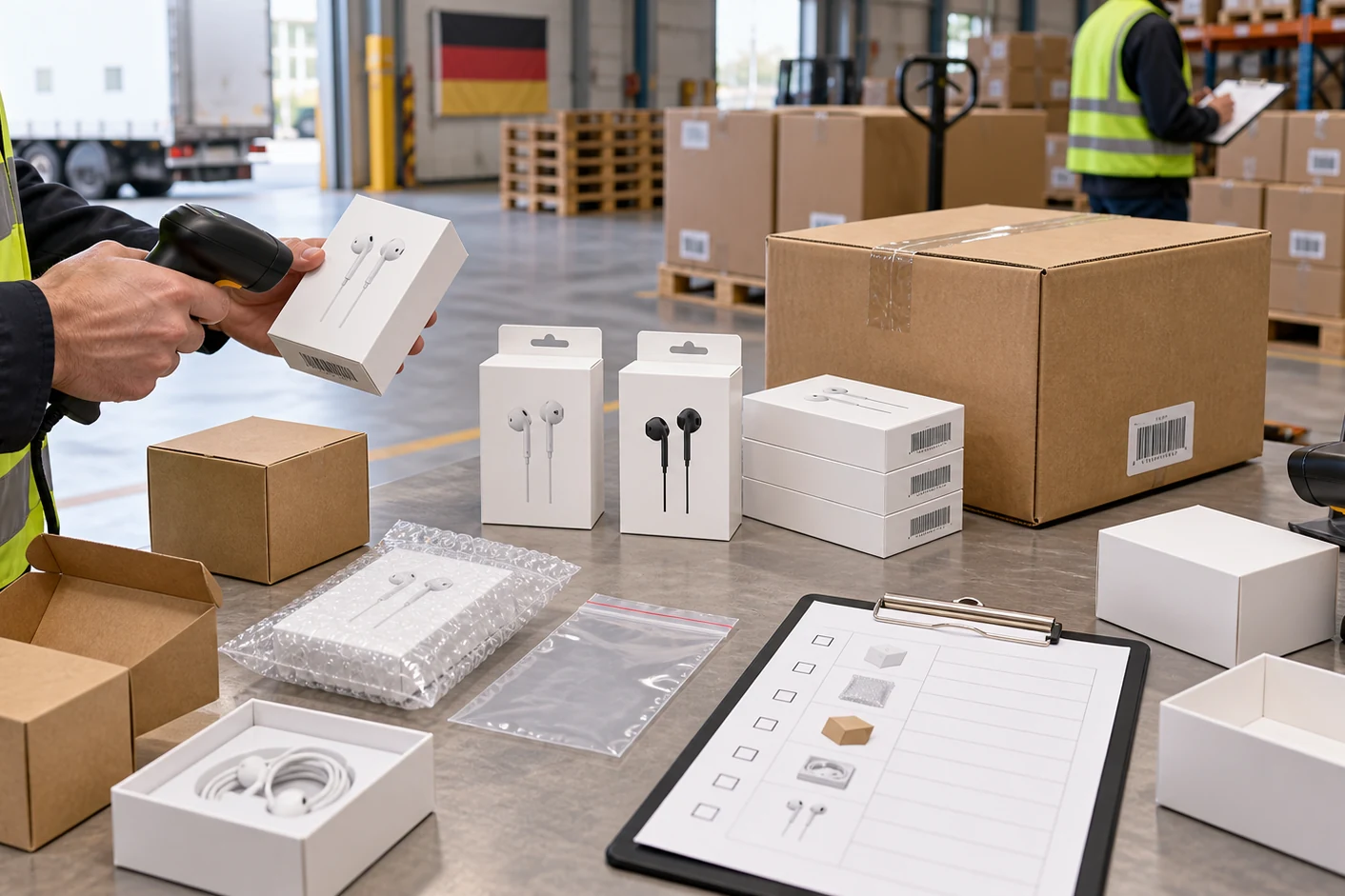
Receiving inspection should confirm unit count, accessory set, sealing, carton condition, model identification, scannability, and whether the product remains immobilized through transport. Packaging artwork and regulatory content require separate approval from acoustic or radio performance. Keeping those approval streams linked but distinct prevents a correct product from shipping in an obsolete box—or correct packaging from masking the wrong internal revision.
Evidence Should Make Problems Reproducible
A useful report states the sample ID, hardware and firmware revision, source device, software version, environment, exact sequence, expected result, observed result, frequency, and recovery step. Photos, short recordings, and timestamps can shorten investigation when they respect privacy and data policy. The MiBA blog supplies broader product reading, while lot decisions should rest on controlled current evidence.
Issue language should distinguish a confirmed defect from an observation that still needs isolation. A report can classify an event as repeatable on every tested unit, intermittent on one sample, dependent on a source device, dependent on fit, or not reproduced. That classification guides the next experiment and prevents premature root-cause claims. When a correction is proposed, rerun the original sequence plus a short regression set covering pairing, calls, controls, charging, and battery reporting. Preserve before-and-after identifiers so a successful retest is tied to the actual hardware or firmware change.
The practical conclusion is that TWS Bluetooth earphones become more consistent when each judgment is tied to a repeatable scene and a defined pass condition. Fit, links, calls, controls, charging, and packaging then form one traceable user journey instead of six disconnected checklists.
A concise release record can therefore state which devices, scenes, sample revisions, and acceptance rules were covered, as well as what remains outside the evidence. The site's company overview can provide organizational context, while the release record preserves the test boundary. That boundary lets a later complaint be compared with tested conditions instead of forcing the team to reconstruct an undocumented decision.
Frequently Asked Questions
Why can the same earbuds sound different to two listeners?
Ear anatomy, tip size, insertion depth, seal, hearing, source settings, and content can all change the experience. A panel should control what it can and record individual fit conditions rather than average away the differences.
Does a newer Bluetooth version guarantee better audio?
No. A core-version label does not by itself identify implemented profiles, codecs, LE Audio support, antenna performance, software behavior, or interoperability. Verify declared features and test them with representative source devices.
How should wireless dropouts be recorded?
Record the device and software, distance, body and phone position, nearby radio activity, movement, media or call state, duration, channel affected, and recovery behavior. A timestamped sequence makes repetition possible.
What is a practical charging-case check?
Begin with known battery states, insert each bud repeatedly, confirm indication and measured charge behavior, move the closed case gently, complete a full cycle, and compare left-right state afterward. Note the cable and power source used.
Why keep an approved physical sample?
It provides a controlled reference for geometry, finish, acoustics, controls, firmware, accessories, and packaging. It must be identified by revision and protected from uncontrolled replacement or modification.
 What Makes A Bluetooth Charger Best Manufacturer Shortlist Defensible?
 You May Also Like


 Tel
Tel
 Email
Email
 Address
No.602,BldA Shanhai Building,Bantian Street,Longgang District,Shenzhen City,Guangdong Provice,China